
-
Follow Us
-
Search
-
Recent Posts
- lazy girl’s guide to creating naturally beautiful hair styles
- trendy diets are now in restaurants
- fashion forward campus: the trend of brand reps
- Spray Your Way Tan
- sole society alessandra bag
-
Recent Comments
- Quantumnerd on Ralph Lauren hires first plus-size model
- The ranch is a runway: Why Texas is a luxury brand hotbed | KayandJerry-Watkins.org on Y’all ready for this? Karl Lagerfeld is coming to Dallas
- on The most important paper you’ll ever write. Or is it?
- on TOMS Aviators change your look — and more
- on alex and ani: my new sweethearts
-
Archives
-
Categories
Why Swiss Watches Have the Reputation of Being the Highest Quality on the Market
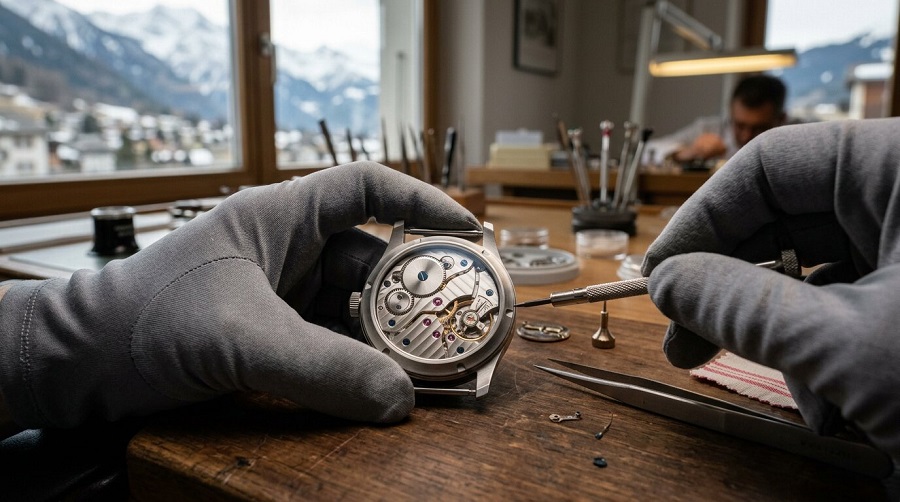
When you pick up a Swiss watch, you’re not just checking the time, you’re handling centuries of refined technique, strict legal standards, and obsessive engineering. The smooth sweep of the hands, the weight on your wrist, and the way every detail lines up all signal something different from ordinary watches. But what actually goes into that reputation for the “best” quality, and how much of it is substance versus story?
What Makes Swiss Watches High Quality?
Although many countries produce high-quality timepieces, Swiss watches are distinguished by regulated standards and established manufacturing practices. The “Swiss Made” label indicates that at least 60% of production costs are incurred in Switzerland, the movement is Swiss, and final assembly and inspection take place in Switzerland, in accordance with Swiss law.
Swiss watch movements are often assembled and adjusted by hand, with components manufactured to very tight tolerances. Many mechanical movements undergo certification by organizations such as COSC (Contrôle Officiel Suisse des Chronomètres), which tests watches for accuracy and consistency under defined conditions.
Production typically combines traditional techniques—such as hand-finishing of movement parts—with modern tools like CAD design, CNC machining, and laser cutting. Movements can consist of hundreds of precisely fitted components, requiring careful engineering and quality control.
Manufacturers generally use durable materials for cases, crystals, and movements, and subject watches to tests for water resistance, shock resistance, magnetic fields, and long-term reliability. This emphasis on serviceability and the availability of spare parts supports the possibility of maintaining and repairing Swiss watches over several decades, provided they receive appropriate care and servicing.
For consumers, understanding these standards can make it easier to evaluate options when browsing collections from established retailers. Julliany offers access to a range of Swiss-made watches, allowing buyers to compare craftsmanship, design, and price points within a curated selection tailored to different preferences.
How Swiss Watchmaking History Shaped Today’s Standards
While contemporary Swiss watches appear modern, their quality standards developed over several centuries of technical experimentation, economic pressure, and regulatory refinement. The industry’s origins are often traced to 16th‑century Huguenot refugees in Geneva, whose watchmaking activities gradually evolved into more specialized ateliers by the 18th century, with clear divisions of labor among component makers and finishers.
Innovators such as Abraham‑Louis Breguet and Antoine LeCoultre contributed significantly to the technical basis of those standards. Breguet advanced complications like the tourbillon and refined escapements, while LeCoultre developed precise measuring instruments and mechanisms that improved manufacturing tolerances.
These developments helped establish benchmarks for accuracy, reliability, and functional complexity that continue to influence current expectations.
In the 20th century, the Swiss watch industry underwent consolidation, including the formation of large groups, which allowed for coordinated investment in technology and marketing. Nicolas G. Hayek’s role in reorganizing the sector during the so‑called “quartz crisis,” particularly through the Swatch Group, combined cost‑efficient production with the preservation of mechanical watchmaking expertise.
Today, this historical trajectory is reflected in codified standards. The “Swiss Made” designation is governed by law and sets minimum thresholds for local value creation and technical work.
Independent chronometer certification by COSC (Contrôle Officiel Suisse des Chronomètres), norms for finishing and decoration, and an emphasis on long‑term serviceability give the industry a framework for measurable performance and durability. Together, these elements translate historical practices and innovations into contemporary, legally and technically defined criteria for Swiss watch quality.
Swiss Craftsmanship: Why These Watches Feel Different
Slip a well‑made Swiss watch onto your wrist and it typically feels distinct: the smooth movement of the hands, the defined action of the crown, and the noticeable weight of precisely machined metal.
These characteristics reflect established manufacturing practices and quality standards developed over centuries. Skilled watchmakers assemble and regulate mechanical movements to very fine tolerances, often measured in microns, and subject them to multi-day testing for accuracy and reliability. Traditional techniques—such as hand-filing, anglage (polished bevels), and perlage (circular graining)—are combined with computer‑aided design and modern production methods, including CNC machining and laser cutting.
The use of materials like stainless steel, precious metals, and synthetic sapphire crystals contributes to durability, scratch resistance, and a particular sense of weight and surface finish. Swiss quality control commonly includes visual inspection, timing tests, and verification of resistance to water, shocks, and wear, in line with industry norms and, for some watches, COSC or other certification standards.
Mechanical Swiss watches are generally designed so that individual components can be serviced, adjusted, or replaced. This maintainability supports long service life and helps explain why many Swiss watches remain functional for decades when properly maintained.
Engineering and “Swiss Made” Rules for Accuracy
That distinct feel on the wrist is grounded in defined engineering practices and regulated criteria for the “Swiss Made” designation. Under current Swiss law, at least 60% of a watch’s production costs must be incurred in Switzerland, and the movement must be assembled and inspected there to qualify for the label.
Accuracy is pursued through both design and manufacturing controls. Many movements are assembled and adjusted by hand, with components produced to very tight dimensional tolerances.
Chronometer-certified movements, tested by the COSC (Contrôle Officiel Suisse des Chronomètres), must maintain an average daily rate within −4/+6 seconds per day under standardized conditions. The use of anti-magnetic materials, silicon components in the escapement, and precision CNC or laser machining supports stable performance. In addition, movements undergo timing tests in multiple positions and over several days, helping to ensure consistent and reliable timekeeping in everyday use.
Materials and Testing Behind Swiss Watch Durability
Swiss watch durability is largely determined by the materials used and the way each component is tested. Most high‑end models use synthetic sapphire crystal with a hardness of about 9 on the Mohs scale, which provides strong resistance to scratching. Cases are commonly made from 18k gold, platinum, or corrosion‑resistant metals such as 316L or 904L stainless steel and titanium.
Within the movement, anti‑magnetic alloys such as Nivarox are used for hairsprings, and plates and bridges are often made from high‑grade brass or German silver to maintain dimensional stability over time. Many watches undergo testing by independent bodies such as COSC, which certifies chronometers within a rate variation of roughly –4 to +6 seconds per day, while some manufacturers apply additional in‑house testing standards.
Durability is further supported by pressure, shock, and fatigue tests designed to simulate everyday wear and more demanding conditions. Manufacturing to micron‑level tolerances and the use of standardized, replaceable components allow movements to be serviced and maintained, contributing to their potential for long service lives when properly cared for.
Are Swiss Luxury Watches Worth the Price and Investment?
Step back from the polished cases and intricate dials, and the question becomes straightforward: are Swiss luxury watches worth their price, and can they reasonably be viewed as investments?
Buyers pay for hand-assembled mechanical movements, often built and finished to very tight tolerances, sometimes incorporating complications that require many hours of skilled labor. This work typically involves specialized craftsmanship, in-house research and development, and relatively low production volumes compared with mass-market watches.
The “Swiss Made” label is regulated: at least 60% of production costs must be incurred in Switzerland, and the movement must be Swiss, cased in Switzerland, and subject to final inspection there. These requirements contribute to perceived quality, brand reputation, and, in some cases, resale value.
Certain brands—such as Patek Philippe, Rolex, and Audemars Piguet—have a documented history of strong demand on the secondary market. Some models, especially those produced in limited quantities or with particular historical or aesthetic significance, have shown notable long-term price appreciation. However, this doesn't apply uniformly across all models or brands, and many Swiss luxury watches depreciate or only retain part of their retail price.
From a strictly functional perspective, if the priority is accurate timekeeping at low cost, quartz watches are generally superior. The justification for the higher price of Swiss luxury watches typically rests on factors such as mechanical craftsmanship, brand heritage, design, and the potential—but not guaranteed—resale or appreciation.
For most buyers, these watches should be viewed primarily as luxury goods with possible investment characteristics, rather than as reliable financial investments.
How to Experience Top-Quality Swiss Watches in Person
Once you look beyond online photos and specification sheets, seeing high-quality Swiss watches in person becomes important for understanding their construction, finishing, and overall presence on the wrist. Visiting an authorized retailer, such as Little Treasury Jewelers in Gambrills, MD, allows you to compare brands like Rolex, Patek Philippe, Omega, and TAG Heuer side by side, as well as examine well-known models such as the Submariner, Nautilus, and Speedmaster.
Arranging a consultation with a knowledgeable specialist can help you better understand movements, complications, and certification standards such as COSC chronometer testing. During such a visit, you can see how features like perpetual calendars, tourbillons, and proprietary case designs (for example, Rolex’s Oyster case) function in practice.
You can also closely inspect elements such as sapphire crystals, case and bracelet materials (including various precious metals and steel alloys), dial and movement finishing, and accompanying documentation or warranty information. Finally, trying different case sizes, thicknesses, and bracelet or strap options enables you to assess comfort, weight, and visual balance relative to your wrist, which is difficult to evaluate accurately online.
Conclusion
When you choose a Swiss watch, you’re not just buying a timekeeper—you’re wearing centuries of craftsmanship, engineering, and design on your wrist. You feel the precision in every click of the crown and see the care in every polished edge. If you value reliability, longevity, and lasting style, a Swiss watch earns its price. Visit a boutique, handle a few pieces, and you’ll quickly understand why these watches define top quality.